

























































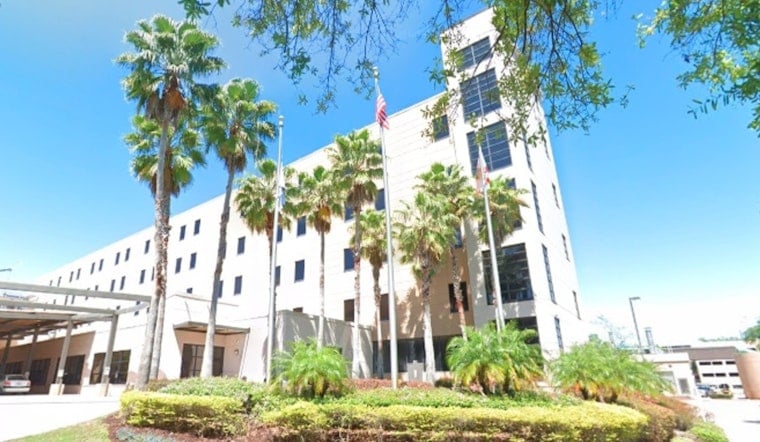
A Brandon father found himself playing the role of delivery room doctor this week after his wife's labor progressed too fast to make it to the hospital, and he ended up catching his newborn daughter in the front seat of their car, parked in a Brandon parking lot.
The dramatic delivery was reported by FOX 13 Tampa Bay, whose reporter Blake Devine covered the birth in a video posted late Thursday night. The outlet confirmed the basic details of the incident: a new father delivered his daughter himself after labor advanced faster than the family could get to a delivery room, with the whole event unfolding in a parking lot in the unincorporated Hillsborough County community of Brandon.
When Labor Moves Faster Than the Drive to the Hospital
Scenarios like this one are more common than most expectant parents realize. Medical professionals define precipitous labor as delivery that progresses in under three hours from the start of regular contractions, and it is estimated to affect between 1% and 3% of pregnancies in the United States, according to the Cleveland Clinic. When labor accelerates that quickly, parents can be left with little to no time to reach a hospital, even one just a short drive away.
Brandon itself is served by HCA Florida Brandon Hospital, a regional facility that includes a Level III Neonatal Intensive Care Unit, the kind of resource emergency responders typically rely on when transporting a mother and newborn following an unplanned roadside delivery. Nationally, out-of-hospital deliveries make up only about 1.5% to 1.6% of all live births, and the Centers for Disease Control and Prevention notes the vast majority of those are planned home or birth center deliveries attended by licensed midwives, not sudden emergencies like this one. Locally, historical data compiled by the Florida Department of Health has put out-of-hospital births at roughly 2% to 3% of vaginal births in Hillsborough County.
The Risks of an Unplanned Delivery
Unplanned deliveries outside a hospital setting are not without danger. The Cleveland Clinic notes that such births carry heightened clinical risks, including maternal postpartum hemorrhage, birth canal tears, infection, and infant hypothermia, which is why prompt medical evaluation by EMS or hospital staff afterward is considered vital. It remains unknown from available reporting what the current medical condition of the mother and newborn is, whether 911 dispatchers coached the father through the delivery, or how quickly paramedics arrived on scene.
Clinical research published this year has found that second-stage labor and ruptured membranes are the primary indicators that predict a birth will happen before a hospital can be reached, according to the National Center for Biotechnology Information. When those signs appear, standard Emergency Medical Dispatch protocols allow 911 telecommunicators to walk callers through the entire process, from positioning the mother to catching the baby, clearing its airway, and keeping it warm until first responders arrive, per Wikipedia's overview of emergency childbirth procedures.
What Comes Next for the Family, Legally
Under Florida law, a birth that happens outside a healthcare facility without a licensed practitioner present triggers specific paperwork. Florida Statute § 382.013 requires parents or an attendant to report the birth to the local registrar and submit proof of the birth facts within five days in order to register a birth certificate.
Florida's Good Samaritan Act, codified as Statute § 768.13, also offers a layer of legal protection for anyone who steps in to help during an emergency like this one. The law shields people who gratuitously and in good faith render emergency care or aid at the scene of an emergency outside a hospital, so long as they act as an ordinary prudent person would under similar circumstances. For a father suddenly thrust into the role of birth attendant in a parking lot, that statute offers some reassurance even as the family now navigates the practical aftermath of an entrance into the world that nobody planned.





